 Assisted Reproduction Center
 Assisted Reproduction Center
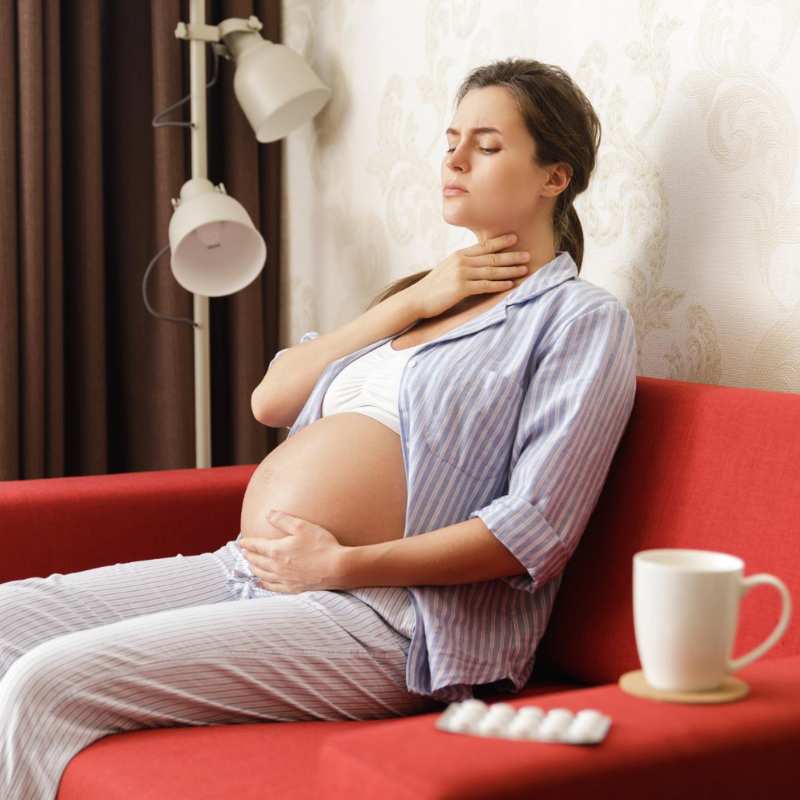
Tonsillitis (acute tonsillitis) during pregnancy is a serious infectious disease characterized by acute inflammation of the lymphoid structures of the pharyngeal ring. The pathological process affects the palatine and lingual tonsils, as well as the tissues of the posterior wall of the pharynx and larynx. This condition requires particular attention from ENT specialists and obstetricians-gynecologists, as the infectious agent (virus or bacteria) can negatively impact the course of pregnancy and fetal development.
General information about the disease
Acute tonsillitis ranks third among the infectious diseases of the upper respiratory tract in pregnant women, behind influenza and acute respiratory infections. Modern medical literature increasingly uses the term “acute pharyngotonsillitis,” as inflammation rarely limits itself to the tonsils, extending to the mucous membrane of the throat.
Statistics show that in adults, the most common origin is viral (60 to 90% of cases). In bacterial cases, responsible for 82% of cases, the main pathogen is beta-hemolytic streptococcus of group A (GAS). The disease is most often diagnosed in women under 35 years of age. The most severe clinical course is observed during the second and third trimesters of pregnancy. The seasonality of the disease depends on its etiology: bacterial forms predominate in early spring, while viral epidemics are typical in autumn-winter periods.
Causes and etiology
Tonsillitis during pregnancy is an anthroponotic infection (transmission from human to human). The main mode of transmission is airborne, making pregnant women vulnerable in crowded places.
Main pathogens:
- Bacteria: Group A streptococcus is the undisputed leader. However, cultures can also reveal other microorganisms: staphylococci, pneumococci, meningococci, as well as rarer forms such as Pfeiffer's bacteria or Vincent's spirochete.
- Viruses: Tonsillitis is often a complication of adenoviral or herpetic infections. In women with weakened immune status, viral infection often prepares the ground for secondary bacterial colonization.
- Specific agents: In rare cases, the cause can be Chlamydia, Mycoplasma, or Candida yeast (especially in the context of prolonged antibiotic use or significant immunodeficiency).
The natural decrease in immunity (physiological immunosuppression), necessary so that the mother's body does not reject the fetus, simultaneously makes her more susceptible to pathogenic flora. Additional risk factors include hypothermia, unbalanced diet, presence of dental caries, and chronic gum diseases.
Pathogenesis: how the disease develops
The infection reaches the mucous of the pharynx from a carrier or sick person. Thanks to specific pathogenicity factors (e.g., M protein), bacteria attach to the epithelium of the tonsils, suppress local defense reactions, and begin to multiply actively.
During their life cycle, microorganisms release toxins that damage tissues. The body reacts with inflammation: capillaries become more permeable, pronounced edema appears, and tissues are infiltrated by neutrophils. Without adequate treatment, lymphoid follicles can break down, leading to pus formation. If infection enters the bloodstream, generalized intoxication develops, affecting virtually all organs and systems of the maternal body.
Classification of tonsillitis forms
Doctors classify tonsillitis based on the nature of tissue changes and severity of progression:
- Catarrhal form: the mildest stage. Characterized by superficial lesion, absence of purulent plaque, and moderate fever. Often of viral origin.
- Purulent form:
- Follicular: distinguishable necrotic follicles are visible on the tonsils ("starry sky" appearance).
- Lacunar: pus accumulates in the tonsillar crypts, forming deposits.
- Fibrinous: fibrinous deposits extend beyond the boundaries of the tonsils.
- Necrotic (ulcerative-membranous): characterized by necrosis of certain tissue areas and ulcer formation. Rare during pregnancy but extremely serious.
- Herpetic: specific viral lesion with formation of small vesicles.
Symptoms and clinical picture
The disease usually begins suddenly. The incubation period lasts from a few hours to two days.
- Hyperthermia: high temperature rising up to 38-40 °C.
- Inflammatory syndrome: chills, significant weakness, muscle aches in the joints and lower back, headaches. In pregnant women, inflammation may be accompanied by nausea and vomiting.
- Local symptoms: severe sore throat, worsening on swallowing, speech difficulty (hoarseness), bad breath.
- Lymphadenitis: pain and swelling of submandibular lymph nodes.
Possible complications
Complications of tonsillitis can be divided into general and specific (obstetric) complications.
General complications:
- Otitis, laryngitis, peritonsillar abscess (or paratonsillar phlegmon).
- Rheumatism, glomerulonephritis (kidney involvement), myocarditis (developing 2 to 4 weeks after illness as an autoimmune response to streptococcus).
- Septicemia and meningitis (in case of infection of the blood or cerebrospinal fluid).
Specific risks for pregnancy:
- First trimester: risk of spontaneous miscarriage due to high temperature and toxic effect on the embryo.
- Second and third trimesters: disruption of uteroplacental blood flow, fetal hypoxia, premature placental abruption.
- Intrauterine infection: some pathogens can cross the placental barrier, causing developmental anomalies or intrauterine fetal death.
- Delivery: women who had tonsillitis shortly before term more often exhibit weakened uterine activity.
Tonsillitis in reproductive medicine protocols
Women undergoing assisted reproductive techniques (ART), such as IVF (in vitro fertilization) and ICSI, form a specific patient category. Developing tonsillitis during this period creates specific risks and requires immediate adaptation of management tactics.
- Stimulation phase of superovulation: infectious process and elevated temperature can negatively affect oocyte maturation quality. Pronounced inflammation may alter ovarian response to hormonal stimulation, which in some cases leads to the cancellation of the cycle or cryopreservation of all obtained embryos without transfer in the current cycle.
- Post-embryo transfer period: a critical period during which implantation occurs. Tonsillitis provokes a strong immune response and release of pro-inflammatory cytokines. The mother's body, mobilized to fight infection, may perceive the embryo as a foreign body, leading to implantation failure. Additionally, a fever above 38 °C is directly toxic for the developing blastocyst.
- Chronic tonsillitis as a hidden threat: presence of a chronic infection focus in the tonsils is a risk factor for chronic endometritis. Bacteria and their toxins can circulate in the blood, creating an unfavorable infectious environment. Therefore, reproductive medicine protocols obligatorily include prenatal preparation, which involves treating pharyngitis.
- Drug interactions: gynecologists must consider the compatibility of medications used to support the luteal phase (progesterone) with antibiotics necessary for treating tonsillitis.
Diagnostic measures
The diagnosis is based on a comprehensive approach:
- Pharyngoscopy: visual examination of the throat by an ENT doctor to assess the condition of the tonsils and presence of whitish deposits.
- Bacteriological culture: a throat swab allows precise identification of the pathogen and its sensitivity to certain antibiotics.
- Laboratory tests: complete blood count (detecting leukocytosis and increased ESR).
- Additional tests: in complex cases, PCR and ELISA methods are used to exclude mononucleosis, diphtheria, or syphilis.
Treatment of tonsillitis in pregnant women
The fundamental principle of treatment is maximum effectiveness with minimal risk to the fetus. Self-medication is strictly prohibited.
Medication treatment:
- Antibiotics: used only in bacterial cases. Certain drugs from penicillins, cephalosporins, and macrolides groups are permitted. They are not fetotoxic (do not harm the fetus) when taken at the correct dosage.
- Antipyretics: used only if temperature exceeds 38.5-39 °C. The preferred medication is paracetamol. NSAIDs (ibuprofen) are permitted with caution during the 1st and 2nd trimesters.
- Local treatment: gargles with antiseptic solutions (chlorhexidine, furacilin), use of herbal decoctions (chamomile, sage). Inhalations and tonsil treatments using the “Tonzillor” device are performed under medical prescription.
Diet and nutrition:
Strict bed rest is recommended during the first days. It is advised to drink plenty of warm fluids (fruit juices, lemon tea, rosehip decoction) to eliminate toxins. Foods should be soft and non-irritating to the throat.
Prognosis and prevention
If treatment is started on time, the prognosis is favorable. The catarrhal form resolves in 3 to 5 days, the purulent form in 7 to 10 days.
For prevention, pregnant women are recommended to:
- Avoid crowded places during epidemic periods.
- Use medical masks.
- Treat caries and chronic tonsillitis promptly during pregnancy planning.
- Strengthen immunity through a balanced diet and outdoor walks.
- After having had tonsillitis, it is essential to undergo ECG and urine analysis to exclude any cardiac or renal complications.
FAQ: Frequently Asked Questions
1. Can tonsillitis be treated during pregnancy without antibiotics? If caused by bacteria (streptococcus), antibiotics are mandatory. Without them, the risk of cardiac and kidney complications for the mother, as well as danger to the fetus’s life, significantly outweighs the risks associated with authorized medications.
2. What can I gargle with without harming the baby? Furalillin solutions, Miramistin, and herbal infusions (chamomile, calendula, sage) are considered safe. Avoid using harsh products without consulting your doctor.
3. Does tonsillitis affect fetal development? Yes, especially if accompanied by high fever (above 38 °C) and severe infection. It can lead to fetal hypoxia. Therefore, it is important to reduce very high fever with approved medications and follow antibiotic treatment.
4. Is hospitalization necessary? Hospitalization is mandatory in severe cases (necrotic purulent form), signs of complications, or if there is a risk of pregnancy termination. Mild cases are usually treated at home under medical supervision.
5. What tests should be done after recovery? One to three weeks after illness, a complete blood test, complete urine analysis, and an ECG are recommended to ensure no late complications of the kidneys or cardiovascular system.
6. Can throat sprays be used? Many sprays are permitted, but they should be selected by a doctor. Some components may be absorbed into the bloodstream and be undesirable for the fetus at an early stage.
7. Does tonsillitis hinder embryo implantation during IVF? Unfortunately, acute tonsillitis after embryo transfer significantly reduces the chances of success. The increase in temperature and immune activation can prevent implantation. If the illness occurs before transfer, doctors often recommend a cryopreservation protocol.
References
- European Society of Clinical Microbiology and Infectious Diseases (ESCMID). ESCMID Guideline for the Management of Acute Sore Throat. Clinical Microbiology and Infection. 2012; 18(Suppl 1): 1-28.
- National Institute for Health and Care Excellence (NICE). Sore throat (acute): antimicrobial prescribing. NICE guideline [NG84]. Last update: 2018.
- SIGN (Scottish Intercollegiate Guidelines Network). Management of sore throat and indications for tonsillectomy. SIGN 117. Edinburgh: SIGN; 2010.
- Cochrane Database of Systematic Reviews. Spinks A, Glasziou PP, Del Mar CB. Antibiotics for sore throat. 2021; (11): CD000023.
- BMJ Best Practice. Acute sore throat: assessment and management. BMJ Publishing Group, 2023.
- World Health Organization (WHO). Model list of essential medicines for pregnancy and lactation. WHO Legal Adviser, 2021.
Royal College of Obstetricians and Gynaecologists (RCOG). Bacterial sepsis during pregnancy (Green-top Guideline No. 64a). 2012.

Dr. Cristina Pérez
Specialist in Assisted Reproduction
Medical Director
Medical Director

Dr. Jean-Paul Bouiller
Specialist in Assisted Reproduction

Dr. Frédéric Lamazou
Specialist in Assisted Reproduction
Dr. Karinna Lattes
Chief Scientific Officer

Dr. Elena Prada
Specialist in Assisted Reproduction

Dr. Maria Jesús Puy
Specialist in Assisted Reproduction

Dr. Patricia Zabala Franco
Specialist in Assisted Reproduction
Have questions?
Request your free consultation today!
Our experts are ready to examine your case history, clarify your choices, and address every question you have.
Don't wait to make informed decisions – your personalized guidance awaits!
The field is filled in incorrectly
+34
- Spain (España)+34
- France (La France)+33
- Italy (Italia)+39
- United Kingdom+44
- United States+1
- Belgium (België)+32
- Switzerland (Schweiz/Suisse)+41
- Germany (Deutschland)+49
- Netherlands (Nederland)+31
- Afghanistan (افغانستان)+93
- Albania (Shqipëri)+355
- Algeria (الجزائر)+213
- American Samoa+1
- Andorra+376
- Angola+244
- Anguilla+1
- Antigua and Barbuda+1
- Argentina+54
- Armenia (Հայաստան)+374
- Aruba+297
- Ascension Island+247
- Australia+61
- Austria (Österreich)+43
- Azerbaijan (Azərbaycan)+994
- Bahamas+1
- Bahrain (البحرين)+973
- Bangladesh (বাংলাদেশ)+880
- Barbados+1
- Belarus (Беларусь)+375
- Belize+501
- Benin (Bénin)+229
- Bermuda+1
- Bhutan (འབྲུག)+975
- Bolivia+591
- Bosnia and Herzegovina (Босна и Херцеговина)+387
- Botswana+267
- Brazil (Brasil)+55
- British Indian Ocean Territory+246
- British Virgin Islands+1
- Brunei+673
- Bulgaria (България)+359
- Burkina Faso+226
- Burundi (Uburundi)+257
- Cambodia (កម្ពុជា)+855
- Cameroon (Cameroun)+237
- Canada+1
- Cape Verde (Kabu Verdi)+238
- Caribbean Netherlands+599
- Cayman Islands+1
- Central African Republic (République centrafricaine)+236
- Chad (Tchad)+235
- Chile+56
- China (中国)+86
- Christmas Island+61
- Cocos (Keeling) Islands+61
- Colombia+57
- Comoros (جزر القمر)+269
- Congo (DRC) (Jamhuri ya Kidemokrasia ya Kongo)+243
- Congo (Republic) (Congo-Brazzaville)+242
- Cook Islands+682
- Costa Rica+506
- Côte d’Ivoire+225
- Croatia (Hrvatska)+385
- Cuba+53
- Curaçao+599
- Cyprus (Κύπρος)+357
- Czech Republic (Česká republika)+420
- Denmark (Danmark)+45
- Djibouti+253
- Dominica+1
- Dominican Republic (República Dominicana)+1
- Ecuador+593
- Egypt (مصر)+20
- El Salvador+503
- Equatorial Guinea (Guinea Ecuatorial)+240
- Eritrea+291
- Estonia (Eesti)+372
- Eswatini+268
- Ethiopia+251
- Falkland Islands (Islas Malvinas)+500
- Faroe Islands (Føroyar)+298
- Fiji+679
- Finland (Suomi)+358
- French Guiana (Guyane française)+594
- French Polynesia (Polynésie française)+689
- Gabon+241
- Gambia+220
- Georgia (საქართველო)+995
- Ghana (Gaana)+233
- Gibraltar+350
- Greece (Ελλάδα)+30
- Greenland (Kalaallit Nunaat)+299
- Grenada+1
- Guadeloupe+590
- Guam+1
- Guatemala+502
- Guernsey+44
- Guinea (Guinée)+224
- Guinea-Bissau (Guiné Bissau)+245
- Guyana+592
- Haiti+509
- Honduras+504
- Hong Kong (香港)+852
- Hungary (Magyarország)+36
- Iceland (Ísland)+354
- India (भारत)+91
- Indonesia+62
- Iran (ایران)+98
- Iraq (العراق)+964
- Ireland+353
- Isle of Man+44
- Israel (ישראל)+972
- Italy (Italia)+39
- Jamaica+1
- Japan (日本)+81
- Jersey+44
- Jordan (الأردن)+962
- Kazakhstan (Казахстан)+7
- Kenya+254
- Kiribati+686
- Kosovo+383
- Kuwait (الكويت)+965
- Kyrgyzstan (Кыргызстан)+996
- Laos (ລາວ)+856
- Latvia (Latvija)+371
- Lebanon (لبنان)+961
- Lesotho+266
- Liberia+231
- Libya (ليبيا)+218
- Liechtenstein+423
- Lithuania (Lietuva)+370
- Luxembourg+352
- Macau (澳門)+853
- North Macedonia (Македонија)+389
- Madagascar (Madagasikara)+261
- Malawi+265
- Malaysia+60
- Maldives+960
- Mali+223
- Malta+356
- Marshall Islands+692
- Martinique+596
- Mauritania (موريتانيا)+222
- Mauritius (Moris)+230
- Mayotte+262
- Mexico (México)+52
- Micronesia+691
- Moldova (Republica Moldova)+373
- Monaco+377
- Mongolia (Монгол)+976
- Montenegro (Crna Gora)+382
- Montserrat+1
- Morocco (المغرب)+212
- Mozambique (Moçambique)+258
- Myanmar (Burma) (မြန်မာ)+95
- Namibia (Namibië)+264
- Nauru+674
- Nepal (नेपाल)+977
- New Caledonia (Nouvelle-Calédonie)+687
- New Zealand+64
- Nicaragua+505
- Niger (Nijar)+227
- Nigeria+234
- Niue+683
- Norfolk Island+672
- North Korea (조선 민주주의 인민 공화국)+850
- Northern Mariana Islands+1
- Norway (Norge)+47
- Oman (عُمان)+968
- Pakistan (پاکستان)+92
- Palau+680
- Palestine (فلسطين)+970
- Panama (Panamá)+507
- Papua New Guinea+675
- Paraguay+595
- Peru (Perú)+51
- Philippines+63
- Poland (Polska)+48
- Portugal+351
- Puerto Rico+1
- Qatar (قطر)+974
- Réunion (La Réunion)+262
- Romania (România)+40
- Russia (Россия)+7
- Rwanda+250
- Saint Barthélemy+590
- Saint Helena+290
- Saint Kitts and Nevis+1
- Saint Lucia+1
- Saint Martin (Saint-Martin (partie française))+590
- Saint Pierre and Miquelon (Saint-Pierre-et-Miquelon)+508
- Saint Vincent and the Grenadines+1
- Samoa+685
- San Marino+378
- São Tomé and Príncipe (São Tomé e Príncipe)+239
- Saudi Arabia (المملكة العربية السعودية)+966
- Senegal (Sénégal)+221
- Serbia (Србија)+381
- Seychelles+248
- Sierra Leone+232
- Singapore+65
- Sint Maarten+1
- Slovakia (Slovensko)+421
- Slovenia (Slovenija)+386
- Solomon Islands+677
- Somalia (Soomaaliya)+252
- South Africa+27
- South Korea (대한민국)+82
- South Sudan (جنوب السودان)+211
- Spain (España)+34
- Sri Lanka (ශ්රී ලංකාව)+94
- Sudan (السودان)+249
- Suriname+597
- Svalbard and Jan Mayen+47
- Sweden (Sverige)+46
- Syria (سوريا)+963
- Taiwan (台灣)+886
- Tajikistan+992
- Tanzania+255
- Thailand (ไทย)+66
- Timor-Leste+670
- Togo+228
- Tokelau+690
- Tonga+676
- Trinidad and Tobago+1
- Tunisia (تونس)+216
- Turkey (Türkiye)+90
- Turkmenistan+993
- Turks and Caicos Islands+1
- Tuvalu+688
- U.S. Virgin Islands+1
- Uganda+256
- Ukraine (Україна)+380
- United Arab Emirates (الإمارات العربية المتحدة)+971
- Uruguay+598
- Uzbekistan (Oʻzbekiston)+998
- Vanuatu+678
- Vatican City (Città del Vaticano)+39
- Venezuela+58
- Vietnam (Việt Nam)+84
- Wallis and Futuna (Wallis-et-Futuna)+681
- Western Sahara (الصحراء الغربية)+212
- Yemen (اليمن)+967
- Zambia+260
- Zimbabwe+263
- Åland Islands+358
The field is filled in incorrectly
Visit our clinic
We are located in the heart of Barcelona.
Location
Call us now
Leave a message