 Assisted Reproduction Center
 Assisted Reproduction Center
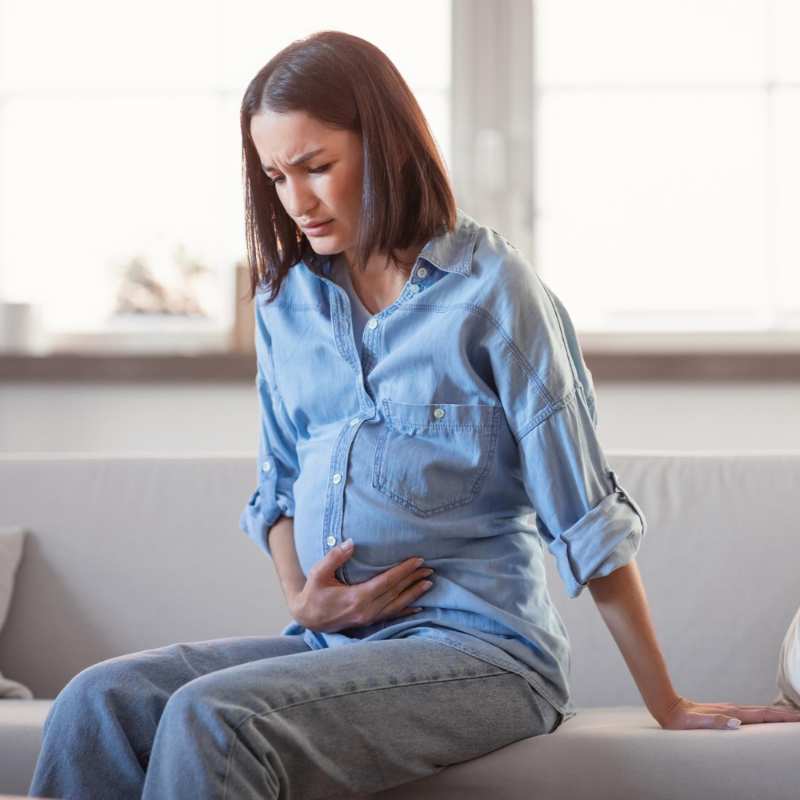
The main insidious aspect of this pathology lies in the fact that pregnancy masks the classic clinical picture, making diagnosis particularly difficult. The main diagnostic methods remain physical examination, transabdominal ultrasound, detailed blood tests, and, in the most complex cases, emergency diagnostic laparoscopy. The only radical and effective treatment method is timely appendectomy, combined with specific treatment aimed at minimizing the risks of fetal loss.
General Information and Statistical Data
The acute form of appendicitis is recognized as the most common surgical abdominal pathology among pregnant women. Statistically, the disease affects between 0.05% and 0.12% of pregnant women. It is important to note that physiological changes in a woman's body not only do not protect against inflammation but also slightly increase its likelihood compared to non-pregnant women of the same age group.
The distribution of cases by trimester highlights the influence of anatomical changes:
- First trimester: 19 to 32% of cases. Diagnosis is easier at this stage because the uterus has not yet reached a significant size.
- Second trimester: 44 to 66% of cases. This is the peak period, associated with the most active growth of the uterus and rapid displacement of internal organs.
- Third trimester: about 15 to 16% of cases. Despite the lower frequency, it is precisely during this period that diagnosis is the most difficult due to the enormous size of the uterus.
- Postpartum period: 6 to 8% of cases. Often associated with a sudden change in intra-abdominal pressure after delivery.
The pressing urgency of the problem is dictated by the fact that symptom attenuation leads to delayed care. Gangrenous and perforated forms in pregnant women are 5 to 6 times more frequent than the average population. These destructive evolutions are the main cause of fetal in utero death and maternal complications.
Etiology and Causes
Appendicitis in pregnant women is caused by the activation of endogenous intestinal microflora. The main "culprits" are anaerobic bacteria (Bacteroides or gram-negative bacilli, peptococci or peptostreptococci, or gram-positive cocci), as well as aggressive strains of Escherichia coli and staphylococci. Four key factors are specific to the gestation period:
- Gradual anatomical displacement. As it enlarges, the uterus pushes the cecum upward and outward. By the end of pregnancy, the appendix can be located nearly under the liver or in the right hypochondrium region. This displacement causes folds and stretching of the appendix, disrupting its drainage function. Additionally, the displaced appendix is deprived of the protection of the greater omentum, which normally "envelops" the inflammatory focus, limiting it.
- Hormone-dependent constipation. Progesterone, the main pregnancy hormone, has a relaxing effect on smooth muscles not only of the uterus but also of the intestines. The slowing of peristalsis leads to fecal stagnation and the formation of fecaliths (coproliths), which can obstruct the lumen of the appendix, thus triggering an inflammatory mechanism.
- Modification of gastric secretory function. The displacement of organs often exacerbates chronic gastritis. Decreased acidity of gastric juice weakens the natural antibacterial barrier, allowing pathogenic flora to colonize the lower parts of the gastrointestinal tract unimpeded.
- Specific immune status. The physiologically immunosuppressed state is necessary to carry a genetically foreign fetus but also slows down the organism's response to bacterial invasion, substantially accelerating the progression from inflammation to destructive stages.
Pathogenesis of the Disease
The development mechanism of the disease is based on occlusion (blockage) of the appendix lumen. Within this closed space, mucous secretion begins to accumulate rapidly, transforming into pus under the influence of bacteria. The pressure inside the appendix increases, leading to compression of small vessels (ischemia).
In response to ischemia, a massive release of inflammatory mediators and cytokines occurs. Due to high pressure, bacteria start to "transpire" through the wall of the appendix into the abdominal cavity even before rupture. When destruction stage occurs, the muscle fibers of the appendix necrotize and perforation happens. In pregnant women, this process accelerates due to increased blood flow to the pelvic organs, which promotes rapid spread of the infection (generalization of the process and risk of peritonitis).
Appendicitis within Reproductive Medicine Protocols
The development of assisted reproductive techniques has created a new risk group. In IVF protocols, appendicitis can develop in the context of a Ovarian Hyperstimulation Syndrome (OHSS). This creates a critical diagnostic trap: both OHSS and appendicitis manifest with abdominal pain, bloating, and nausea.
Enlarged and stimulated ovaries (sometimes as large as a grapefruit) can physically compress the appendix, causing inflammation. On ultrasound, these ovaries obscure (cover) the appendix, making it invisible to the probe. In such cases, physicians must exercise extreme caution to avoid confusing a surgical pathology with a side effect of hormonal treatment. Laparoscopy remains the only reliable way to safeguard both the woman's health and the results of an expensive IVF protocol.
Classification of Forms and Stages
The morphological classification reflects the sequence of tissue destruction:
- Catarrhal (simple): inflammation of the mucosa alone. Lasts up to 6-12 hours. The prognosis is very favorable.
- Phlegmonous (purulent): involvement of the entire thickness of the wall. The appendix is tense, covered with fibrin deposits. This is a critical point after which the risk of rupture becomes inevitable.
- Gangrenous: necrosis (death) of tissues. The appendix takes on a dark green or black color. Due to nerve ending death at this stage, pain may temporarily diminish, creating a dangerous illusion of "recovery".
Clinical Symptoms by Period
The manifestations of the disease evolve depending on the woman's body:
- First trimester: classic symptoms — pain begins in the epigastrium (below the xyphoid process) and descends after a few hours to the right iliac region (Kocher's symptom). However, patients often confuse this with toxemia, thus losing valuable time.
- Second and third trimesters: due to the high position of the uterine fundus, pain is localized much higher than usual, at the navel or in the subcostal region. Tension of the abdominal muscles (protective defense) is weak because muscles are already stretched by pregnancy. This often leads to an erroneous diagnosis of "cholecystitis" or "gastritis".
- During delivery: Appendicitis during labor is a disaster. Pain caused by inflammation blends with contraction pains. The doctor must be vigilant if, between contractions, the abdomen does not fully relax and body temperature begins to rise.
Complications and Risks
The consequences of delayed treatment are extremely serious. Rupture of the appendix leads to diffuse peritonitis, causing severe poisoning of the mother's organism. This results in:
- For the fetus: hypoxia (oxygen deficiency), infection of amniotic fluid and placenta, leading to fetal death in 28-30% of cases upon rupture of the appendix.
- For the mother: risk of septicemia, thromboembolic complications, and massive hemorrhages due to coagulation disturbances on a background of inflammation.
Diagnosis
The examination algorithm in cases of suspected appendicitis includes:
- Laboratory monitoring: a single blood analysis of leukocytes is not very informative (their levels are already high during pregnancy). Dynamic monitoring is important: if leukocyte count increases sharply over 2-3 hours, it confirms inflammation.
- Ultrasound: search for the "target sign" in the right side of the abdomen. It is a non-invasive and safe method, constituting the "first line" of defense.
- MRI (without contrast): in several European clinics, it is used as a confirmation method in the second trimester if ultrasound provided no clear answer and symptoms persist.
Treatment and Postoperative Strategy
The only option is surgery. Treatment principles include:
- Choice of access: until 18 weeks, laparoscopy is the "gold standard." It allows detailed examination of the uterus, ovaries, and appendix through micro-perforations. At more advanced stages, traditional incision is more often performed, moved higher depending on the position of the uterus.
- Maintaining pregnancy: after surgery, tocolytic treatment (medications to relax the uterus) is obligatorily prescribed to prevent premature labor triggered by surgical stress.
- Rehabilitation: it is important for the patient to mobilize quickly (walk) to avoid adhesions and restore intestinal function without resorting to enemas or laxatives, which can provoke uterine contractions.
Prognosis and Prevention
The success of treatment depends 90% on timing. If the operation is performed within the first 12 hours after the onset of pain, risks are minimal. After 24 hours, the risk of pregnancy loss increases exponentially.
Prevention is limited to "digestive hygiene":
- Divided meals (5 to 6 times a day) in small portions.
- Mandatory inclusion of fiber-rich foods (bran, vegetables, apples) in the diet.
- Control of water intake (at least 1.5 to 2 liters of water).
- Daily walks in fresh air to stimulate intestinal transit.
Bibliography (European sources)
- WSES Guidelines 2020: Updated protocols of the World Society of Emergency Surgery for the diagnosis of acute appendicitis (Italy).
- EAES Consensus: Consensus of the European Association of Endoscopic Surgery on the management of surgical diseases in pregnant women.
- European Journal of Radiology: Analysis of the effectiveness of ultrasound and MRI in diagnosing appendicitis in pregnant women (France, 2021).
- The Lancet Discovery Science: Studies on long-term outcomes for children whose mothers underwent appendectomy during pregnancy (Germany).
FAQ: Frequently Asked Questions
1. Can appendicitis disappear on its own during pregnancy? No, this is impossible. Acute inflammation of the appendix is an irreversible process that inevitably leads to its destruction and rupture. Waiting for a "miracle" or self-treatment only increases the risk of fetal death.
2. Is laparoscopy safe for the child? Yes, recent studies confirm that laparoscopy is safer than traditional surgery because it is less traumatic, causes less pain, and allows the woman to recover faster, reducing stress levels for the fetus.
3. How often is appendicitis confused with usual pregnancy pains? Quite often. About 40% of early-stage cases are considered threatened miscarriages or intestinal colic. That is why, in case of persistent abdominal pain lasting more than 2-3 hours, consultation with a surgeon is necessary.
4. Does appendectomy affect future pregnancies? In the absence of complications (such as peritonitis or significant adhesions), the operation has no impact on a woman's ability to conceive and carry a pregnancy to term in the future.
5. Should a strict diet be followed after surgery? Yes, in the first days, diet should be as light as possible (broths, water-based porridge) to avoid overloading the intestine, which is in a state of temporary paralysis after surgery. It also helps avoid unnecessary pressure on the uterus.

Dr. Cristina Pérez
Specialist in Assisted Reproduction
Medical Director
Medical Director
Dr. Jean-Paul Bouiller
Specialist in Assisted Reproduction

Dr. Frédéric Lamazou
Specialist in Assisted Reproduction
Dr. Karinna Lattes
Chief Scientific Officer

Dr. Elena Prada
Specialist in Assisted Reproduction
Dr. Maria Jesús Puy
Specialist in Assisted Reproduction

Dr. Patricia Zabala Franco
Specialist in Assisted Reproduction
Have questions?
Request your free consultation today!
Our experts are ready to examine your case history, clarify your choices, and address every question you have.
Don't wait to make informed decisions – your personalized guidance awaits!
The field is filled in incorrectly
+34
- Spain (España)+34
- France (La France)+33
- Italy (Italia)+39
- United Kingdom+44
- United States+1
- Belgium (België)+32
- Switzerland (Schweiz/Suisse)+41
- Germany (Deutschland)+49
- Netherlands (Nederland)+31
- Afghanistan (افغانستان)+93
- Albania (Shqipëri)+355
- Algeria (الجزائر)+213
- American Samoa+1
- Andorra+376
- Angola+244
- Anguilla+1
- Antigua and Barbuda+1
- Argentina+54
- Armenia (Հայաստան)+374
- Aruba+297
- Ascension Island+247
- Australia+61
- Austria (Österreich)+43
- Azerbaijan (Azərbaycan)+994
- Bahamas+1
- Bahrain (البحرين)+973
- Bangladesh (বাংলাদেশ)+880
- Barbados+1
- Belarus (Беларусь)+375
- Belize+501
- Benin (Bénin)+229
- Bermuda+1
- Bhutan (འབྲུག)+975
- Bolivia+591
- Bosnia and Herzegovina (Босна и Херцеговина)+387
- Botswana+267
- Brazil (Brasil)+55
- British Indian Ocean Territory+246
- British Virgin Islands+1
- Brunei+673
- Bulgaria (България)+359
- Burkina Faso+226
- Burundi (Uburundi)+257
- Cambodia (កម្ពុជា)+855
- Cameroon (Cameroun)+237
- Canada+1
- Cape Verde (Kabu Verdi)+238
- Caribbean Netherlands+599
- Cayman Islands+1
- Central African Republic (République centrafricaine)+236
- Chad (Tchad)+235
- Chile+56
- China (中国)+86
- Christmas Island+61
- Cocos (Keeling) Islands+61
- Colombia+57
- Comoros (جزر القمر)+269
- Congo (DRC) (Jamhuri ya Kidemokrasia ya Kongo)+243
- Congo (Republic) (Congo-Brazzaville)+242
- Cook Islands+682
- Costa Rica+506
- Côte d’Ivoire+225
- Croatia (Hrvatska)+385
- Cuba+53
- Curaçao+599
- Cyprus (Κύπρος)+357
- Czech Republic (Česká republika)+420
- Denmark (Danmark)+45
- Djibouti+253
- Dominica+1
- Dominican Republic (República Dominicana)+1
- Ecuador+593
- Egypt (مصر)+20
- El Salvador+503
- Equatorial Guinea (Guinea Ecuatorial)+240
- Eritrea+291
- Estonia (Eesti)+372
- Eswatini+268
- Ethiopia+251
- Falkland Islands (Islas Malvinas)+500
- Faroe Islands (Føroyar)+298
- Fiji+679
- Finland (Suomi)+358
- French Guiana (Guyane française)+594
- French Polynesia (Polynésie française)+689
- Gabon+241
- Gambia+220
- Georgia (საქართველო)+995
- Ghana (Gaana)+233
- Gibraltar+350
- Greece (Ελλάδα)+30
- Greenland (Kalaallit Nunaat)+299
- Grenada+1
- Guadeloupe+590
- Guam+1
- Guatemala+502
- Guernsey+44
- Guinea (Guinée)+224
- Guinea-Bissau (Guiné Bissau)+245
- Guyana+592
- Haiti+509
- Honduras+504
- Hong Kong (香港)+852
- Hungary (Magyarország)+36
- Iceland (Ísland)+354
- India (भारत)+91
- Indonesia+62
- Iran (ایران)+98
- Iraq (العراق)+964
- Ireland+353
- Isle of Man+44
- Israel (ישראל)+972
- Italy (Italia)+39
- Jamaica+1
- Japan (日本)+81
- Jersey+44
- Jordan (الأردن)+962
- Kazakhstan (Казахстан)+7
- Kenya+254
- Kiribati+686
- Kosovo+383
- Kuwait (الكويت)+965
- Kyrgyzstan (Кыргызстан)+996
- Laos (ລາວ)+856
- Latvia (Latvija)+371
- Lebanon (لبنان)+961
- Lesotho+266
- Liberia+231
- Libya (ليبيا)+218
- Liechtenstein+423
- Lithuania (Lietuva)+370
- Luxembourg+352
- Macau (澳門)+853
- North Macedonia (Македонија)+389
- Madagascar (Madagasikara)+261
- Malawi+265
- Malaysia+60
- Maldives+960
- Mali+223
- Malta+356
- Marshall Islands+692
- Martinique+596
- Mauritania (موريتانيا)+222
- Mauritius (Moris)+230
- Mayotte+262
- Mexico (México)+52
- Micronesia+691
- Moldova (Republica Moldova)+373
- Monaco+377
- Mongolia (Монгол)+976
- Montenegro (Crna Gora)+382
- Montserrat+1
- Morocco (المغرب)+212
- Mozambique (Moçambique)+258
- Myanmar (Burma) (မြန်မာ)+95
- Namibia (Namibië)+264
- Nauru+674
- Nepal (नेपाल)+977
- New Caledonia (Nouvelle-Calédonie)+687
- New Zealand+64
- Nicaragua+505
- Niger (Nijar)+227
- Nigeria+234
- Niue+683
- Norfolk Island+672
- North Korea (조선 민주주의 인민 공화국)+850
- Northern Mariana Islands+1
- Norway (Norge)+47
- Oman (عُمان)+968
- Pakistan (پاکستان)+92
- Palau+680
- Palestine (فلسطين)+970
- Panama (Panamá)+507
- Papua New Guinea+675
- Paraguay+595
- Peru (Perú)+51
- Philippines+63
- Poland (Polska)+48
- Portugal+351
- Puerto Rico+1
- Qatar (قطر)+974
- Réunion (La Réunion)+262
- Romania (România)+40
- Russia (Россия)+7
- Rwanda+250
- Saint Barthélemy+590
- Saint Helena+290
- Saint Kitts and Nevis+1
- Saint Lucia+1
- Saint Martin (Saint-Martin (partie française))+590
- Saint Pierre and Miquelon (Saint-Pierre-et-Miquelon)+508
- Saint Vincent and the Grenadines+1
- Samoa+685
- San Marino+378
- São Tomé and Príncipe (São Tomé e Príncipe)+239
- Saudi Arabia (المملكة العربية السعودية)+966
- Senegal (Sénégal)+221
- Serbia (Србија)+381
- Seychelles+248
- Sierra Leone+232
- Singapore+65
- Sint Maarten+1
- Slovakia (Slovensko)+421
- Slovenia (Slovenija)+386
- Solomon Islands+677
- Somalia (Soomaaliya)+252
- South Africa+27
- South Korea (대한민국)+82
- South Sudan (جنوب السودان)+211
- Spain (España)+34
- Sri Lanka (ශ්රී ලංකාව)+94
- Sudan (السودان)+249
- Suriname+597
- Svalbard and Jan Mayen+47
- Sweden (Sverige)+46
- Syria (سوريا)+963
- Taiwan (台灣)+886
- Tajikistan+992
- Tanzania+255
- Thailand (ไทย)+66
- Timor-Leste+670
- Togo+228
- Tokelau+690
- Tonga+676
- Trinidad and Tobago+1
- Tunisia (تونس)+216
- Turkey (Türkiye)+90
- Turkmenistan+993
- Turks and Caicos Islands+1
- Tuvalu+688
- U.S. Virgin Islands+1
- Uganda+256
- Ukraine (Україна)+380
- United Arab Emirates (الإمارات العربية المتحدة)+971
- Uruguay+598
- Uzbekistan (Oʻzbekiston)+998
- Vanuatu+678
- Vatican City (Città del Vaticano)+39
- Venezuela+58
- Vietnam (Việt Nam)+84
- Wallis and Futuna (Wallis-et-Futuna)+681
- Western Sahara (الصحراء الغربية)+212
- Yemen (اليمن)+967
- Zambia+260
- Zimbabwe+263
- Åland Islands+358
The field is filled in incorrectly
Visit our clinic
We are located in the heart of Barcelona.
Location
Call us now
Leave a message