Assisted Reproduction Center
 Assisted Reproduction Center
Not all eggs are fertilized due to biological factors (the quality of the eggs and sperm, the thickness of the egg membrane), but the ICSI method significantly increases the chances, although success still depends on the individual characteristics of the cells and the conditions in the embryology laboratory.
Natural fertilization process during IVF
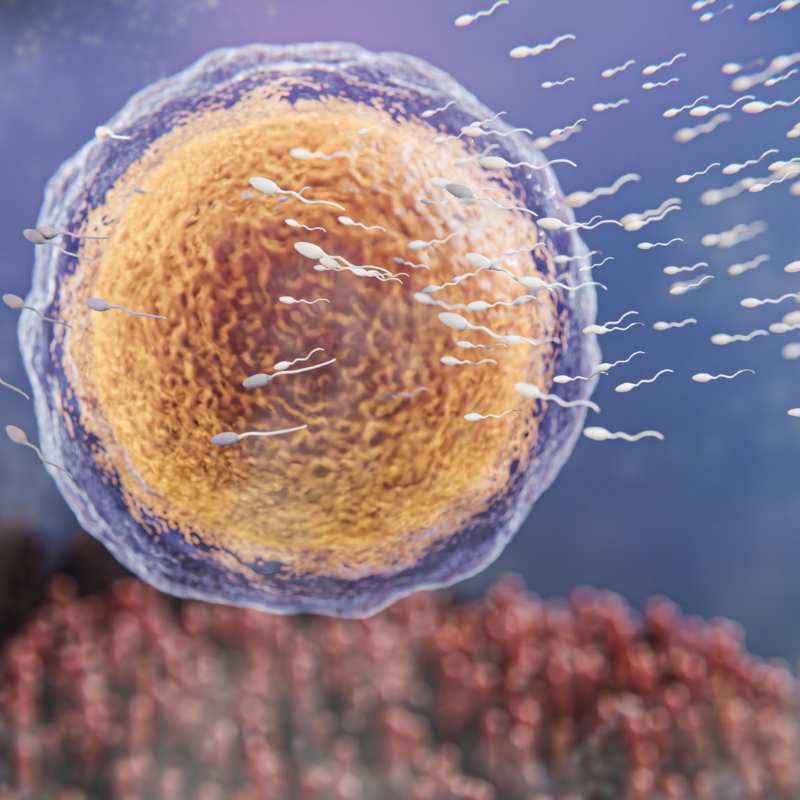
During in vitro fertilization (IVF), eggs and sperm are brought into close contact. Sperm can naturally penetrate the egg, triggering the fertilization process. However, this method is not always effective.
Most often, this is due to poor-quality sperm or eggs, or changes in their structure or metabolism. Sometimes, the cause may be an unusually thick egg membrane, which makes it difficult for sperm to penetrate. In such cases, the most morphologically suitable sperm can be selected, followed by the ICSI technique to achieve fertilization. This method can achieve fertilization even when the quality of the germ cells is reduced, giving couples a chance when the conventional method has been unsuccessful.
It should also be taken into account that the number of eggs retrieved during a cycle varies from woman to woman. The fewer mature cells available, the more important it is to choose the right fertilization technique. That is why modern embryology places great importance on prior diagnosis and the selection of an individual treatment protocol.
ICSI method: features and benefits
ICSI involves injecting a previously selected, most viable sperm directly into a mature egg using a micromanipulator. This approach offers many benefits and significantly increases the chances of fertilization, especially when sperm or egg quality is not optimal. The embryologist manually selects the sperm with the best morphological characteristics, which helps reduce the risk of transmitting defects and improve the quality of the resulting embryo.
The ICSI technique is used in cases of severe male infertility, low sperm motility, low sperm count, or abnormal sperm shape. ICSI is also relevant if the woman has already had unsuccessful attempts at fertilization using the standard method. These benefits make this method one of the key tools in modern reproductive medicine.
Egg fertilization rates
It is important to emphasize that no method guarantees a 100% result. According to statistics:
- the minimum fertilization rate for a woman's eggs is 58.1%;
- the desired rate is 63.2%;
- the optimal rate is 73.5%.
When donor eggs are used, the recommended rates are higher:
- minimum fertilization rate: 66.3%;
- desired rate: 70.3%;
- optimal rate: 78.9%.
Nevertheless, fertilization does not occur in 1–3% of cases, resulting in complete failure. These figures underscore that even the most modern technologies cannot overcome biological limitations related to the characteristics of sex cells and their individual features.
Monitoring the fertilization process
The embryologist checks for fertilization 17 ± 1 hours after the procedure. The processes that occur during conventional IVF are delayed by one hour compared with those in ICSI. The asynchrony of events can influence the embryo's subsequent development. If the check is carried out later than scheduled, there is a risk of misinterpreting the results.
When assessing fertilization, the embryologist examines not only the appearance of the pronuclei, but also their number, location, and the overall condition of the cytoplasm. These parameters help predict the embryo's further developmental potential and its suitability for transfer.
Importance of zygote assessment
The characteristics of the zygote are a key indicator of germ cell quality and the prognosis for successful embryo implantation. Studies show that morphological assessment of the zygote has considerable predictive value because it is directly related to the karyotype and the risk of developmental arrest. The presence of abnormalities at an early stage may indicate an increased risk of genetic disorders and a lower chance of normal development.
It is also important to emphasize that not all fertilized eggs develop into full-fledged embryos. Some zygotes may stop developing at an early stage, and only the most viable ones continue dividing and form a blastocyst.
Normal fertilization
In a normal process, two pronuclei (PN) form inside the egg: one from the mother and the other from the father. They should be the same size, located in the center of the cytoplasm, and surrounded by clearly defined transparent membranes. This state significantly increases the chances of the embryo developing normally.
A normal arrangement of the pronuclei indicates the correct fusion of genetic material, which is the basis for a stable chromosome set. These embryos most often develop without delay and have strong potential for successful implantation.
Abnormal fertilization
Sometimes, instead of two pronuclei, one, three, or more may appear. This is most often due to two sperm entering the egg, indicating a failure of the protective mechanism. The ICSI method helps minimize these risks because it prevents multiple sperm from entering. Abnormal fertilization often leads to genetic abnormalities that cause the embryo's development to stop.
Such situations highlight that embryology is not merely a mechanical process, but also a complex biological system in which the slightest failure can affect the final outcome. That is why an individual treatment strategy is developed for each couple, taking into account previous failures and all possible risks.
If fertilization has not occurred
Sometimes, after the procedure, unfertilized eggs without pronuclei remain. Specific changes must occur in the egg for fertilization to take place. If the sperm cannot trigger these changes, or if the egg cannot produce them, the process does not occur.
In recent years, methods for activating eggs in vitro using a calcium ionophore have begun to be used. This technique stimulates activation and increases fertilization rates. However, it is still considered experimental, and further research is needed to confirm its reliability. Nevertheless, the initial results are encouraging, as they can improve treatment effectiveness in complex cases.
Factors influencing fertilization success
Many factors influence the effectiveness of an IVF program:
- proper preparation for the protocol;
- the quality of the medications used to stimulate follicle growth;
- the professionalism and experience of the embryologists;
- the level of equipment and cleanliness in the embryology laboratory;
- the composition and quality of the culture medium.
The woman's overall health, age, and any coexisting conditions also play a role. The older the patient, the lower the probability of obtaining high-quality eggs. That is why early diagnosis and, if necessary, the use of donor eggs are important steps.
The couple's state of mind is just as important: confidence in success and a positive attitude significantly increase the chances of successful treatment. Many specialists emphasize that emotional support, working with a psychologist, and participating in support groups help couples get through treatment more easily and remain optimistic.
Ultimately, the fertilization process is a complex combination of biological and medical factors, and its success depends on the precision of the specialists' work, the quality of laboratory conditions, and the individual characteristics of the body. That is why modern reproductive technologies continue to improve, offering patients increasingly effective and reliable solutions.
The reproductive medicine clinic NatuVitro has one of the highest fertilization success rates, backed by many years of experience and the trust of its patients.
Dr. Cristina Pérez
Specialist in Assisted Reproduction
Medical Director
Medical Director
Dr. Jean-Paul Bouiller
Specialist in Assisted Reproduction
Dr. Frédéric Lamazou
Specialist in Assisted Reproduction
Dr. Karinna Lattes
Chief Scientific Officer
Dr. Elena Prada
Specialist in Assisted Reproduction
Dr. Maria Jesús Puy
Specialist in Assisted Reproduction
Dr. Patricia Zabala Franco
Specialist in Assisted Reproduction
Have questions?
Request your free consultation today!
Our experts are ready to examine your case history, clarify your choices, and address every question you have.
Don't wait to make informed decisions – your personalized guidance awaits!
The field is filled in incorrectly
+34
- Spain (España)+34
- France (La France)+33
- Italy (Italia)+39
- United Kingdom+44
- United States+1
- Belgium (België)+32
- Switzerland (Schweiz/Suisse)+41
- Germany (Deutschland)+49
- Netherlands (Nederland)+31
- Afghanistan (افغانستان)+93
- Albania (Shqipëri)+355
- Algeria (الجزائر)+213
- American Samoa+1
- Andorra+376
- Angola+244
- Anguilla+1
- Antigua and Barbuda+1
- Argentina+54
- Armenia (Հայաստան)+374
- Aruba+297
- Ascension Island+247
- Australia+61
- Austria (Österreich)+43
- Azerbaijan (Azərbaycan)+994
- Bahamas+1
- Bahrain (البحرين)+973
- Bangladesh (বাংলাদেশ)+880
- Barbados+1
- Belarus (Беларусь)+375
- Belize+501
- Benin (Bénin)+229
- Bermuda+1
- Bhutan (འབྲུག)+975
- Bolivia+591
- Bosnia and Herzegovina (Босна и Херцеговина)+387
- Botswana+267
- Brazil (Brasil)+55
- British Indian Ocean Territory+246
- British Virgin Islands+1
- Brunei+673
- Bulgaria (България)+359
- Burkina Faso+226
- Burundi (Uburundi)+257
- Cambodia (កម្ពុជា)+855
- Cameroon (Cameroun)+237
- Canada+1
- Cape Verde (Kabu Verdi)+238
- Caribbean Netherlands+599
- Cayman Islands+1
- Central African Republic (République centrafricaine)+236
- Chad (Tchad)+235
- Chile+56
- China (中国)+86
- Christmas Island+61
- Cocos (Keeling) Islands+61
- Colombia+57
- Comoros (جزر القمر)+269
- Congo (DRC) (Jamhuri ya Kidemokrasia ya Kongo)+243
- Congo (Republic) (Congo-Brazzaville)+242
- Cook Islands+682
- Costa Rica+506
- Côte d’Ivoire+225
- Croatia (Hrvatska)+385
- Cuba+53
- Curaçao+599
- Cyprus (Κύπρος)+357
- Czech Republic (Česká republika)+420
- Denmark (Danmark)+45
- Djibouti+253
- Dominica+1
- Dominican Republic (República Dominicana)+1
- Ecuador+593
- Egypt (مصر)+20
- El Salvador+503
- Equatorial Guinea (Guinea Ecuatorial)+240
- Eritrea+291
- Estonia (Eesti)+372
- Eswatini+268
- Ethiopia+251
- Falkland Islands (Islas Malvinas)+500
- Faroe Islands (Føroyar)+298
- Fiji+679
- Finland (Suomi)+358
- French Guiana (Guyane française)+594
- French Polynesia (Polynésie française)+689
- Gabon+241
- Gambia+220
- Georgia (საქართველო)+995
- Ghana (Gaana)+233
- Gibraltar+350
- Greece (Ελλάδα)+30
- Greenland (Kalaallit Nunaat)+299
- Grenada+1
- Guadeloupe+590
- Guam+1
- Guatemala+502
- Guernsey+44
- Guinea (Guinée)+224
- Guinea-Bissau (Guiné Bissau)+245
- Guyana+592
- Haiti+509
- Honduras+504
- Hong Kong (香港)+852
- Hungary (Magyarország)+36
- Iceland (Ísland)+354
- India (भारत)+91
- Indonesia+62
- Iran (ایران)+98
- Iraq (العراق)+964
- Ireland+353
- Isle of Man+44
- Israel (ישראל)+972
- Italy (Italia)+39
- Jamaica+1
- Japan (日本)+81
- Jersey+44
- Jordan (الأردن)+962
- Kazakhstan (Казахстан)+7
- Kenya+254
- Kiribati+686
- Kosovo+383
- Kuwait (الكويت)+965
- Kyrgyzstan (Кыргызстан)+996
- Laos (ລາວ)+856
- Latvia (Latvija)+371
- Lebanon (لبنان)+961
- Lesotho+266
- Liberia+231
- Libya (ليبيا)+218
- Liechtenstein+423
- Lithuania (Lietuva)+370
- Luxembourg+352
- Macau (澳門)+853
- North Macedonia (Македонија)+389
- Madagascar (Madagasikara)+261
- Malawi+265
- Malaysia+60
- Maldives+960
- Mali+223
- Malta+356
- Marshall Islands+692
- Martinique+596
- Mauritania (موريتانيا)+222
- Mauritius (Moris)+230
- Mayotte+262
- Mexico (México)+52
- Micronesia+691
- Moldova (Republica Moldova)+373
- Monaco+377
- Mongolia (Монгол)+976
- Montenegro (Crna Gora)+382
- Montserrat+1
- Morocco (المغرب)+212
- Mozambique (Moçambique)+258
- Myanmar (Burma) (မြန်မာ)+95
- Namibia (Namibië)+264
- Nauru+674
- Nepal (नेपाल)+977
- New Caledonia (Nouvelle-Calédonie)+687
- New Zealand+64
- Nicaragua+505
- Niger (Nijar)+227
- Nigeria+234
- Niue+683
- Norfolk Island+672
- North Korea (조선 민주주의 인민 공화국)+850
- Northern Mariana Islands+1
- Norway (Norge)+47
- Oman (عُمان)+968
- Pakistan (پاکستان)+92
- Palau+680
- Palestine (فلسطين)+970
- Panama (Panamá)+507
- Papua New Guinea+675
- Paraguay+595
- Peru (Perú)+51
- Philippines+63
- Poland (Polska)+48
- Portugal+351
- Puerto Rico+1
- Qatar (قطر)+974
- Réunion (La Réunion)+262
- Romania (România)+40
- Russia (Россия)+7
- Rwanda+250
- Saint Barthélemy+590
- Saint Helena+290
- Saint Kitts and Nevis+1
- Saint Lucia+1
- Saint Martin (Saint-Martin (partie française))+590
- Saint Pierre and Miquelon (Saint-Pierre-et-Miquelon)+508
- Saint Vincent and the Grenadines+1
- Samoa+685
- San Marino+378
- São Tomé and Príncipe (São Tomé e Príncipe)+239
- Saudi Arabia (المملكة العربية السعودية)+966
- Senegal (Sénégal)+221
- Serbia (Србија)+381
- Seychelles+248
- Sierra Leone+232
- Singapore+65
- Sint Maarten+1
- Slovakia (Slovensko)+421
- Slovenia (Slovenija)+386
- Solomon Islands+677
- Somalia (Soomaaliya)+252
- South Africa+27
- South Korea (대한민국)+82
- South Sudan (جنوب السودان)+211
- Spain (España)+34
- Sri Lanka (ශ්රී ලංකාව)+94
- Sudan (السودان)+249
- Suriname+597
- Svalbard and Jan Mayen+47
- Sweden (Sverige)+46
- Syria (سوريا)+963
- Taiwan (台灣)+886
- Tajikistan+992
- Tanzania+255
- Thailand (ไทย)+66
- Timor-Leste+670
- Togo+228
- Tokelau+690
- Tonga+676
- Trinidad and Tobago+1
- Tunisia (تونس)+216
- Turkey (Türkiye)+90
- Turkmenistan+993
- Turks and Caicos Islands+1
- Tuvalu+688
- U.S. Virgin Islands+1
- Uganda+256
- Ukraine (Україна)+380
- United Arab Emirates (الإمارات العربية المتحدة)+971
- Uruguay+598
- Uzbekistan (Oʻzbekiston)+998
- Vanuatu+678
- Vatican City (Città del Vaticano)+39
- Venezuela+58
- Vietnam (Việt Nam)+84
- Wallis and Futuna (Wallis-et-Futuna)+681
- Western Sahara (الصحراء الغربية)+212
- Yemen (اليمن)+967
- Zambia+260
- Zimbabwe+263
- Åland Islands+358
The field is filled in incorrectly
Visit our clinic
We are located in the heart of Barcelona.
Location
Call us now
Leave a message